Thursday, August 25, 2016

Why Hasn’t Your Doctor Heard of SCENAR?

It may take an entire generation before doctors with new training get into the field. Photo via VisualHunt.com 
If you’ve had the chance to experience SCENAR therapy for yourself, you may wonder why the whole world isn’t talking about this amazing technology. The SCENAR offers incredible healing potential for just about every injury, from minor cuts to twisted ankles and even spinal damage. It can heal brand new injuries before they even have time to set in or old injuries that have been causing chronic pain for years or even decades! So why isn’t your doctor prescribing SCENAR treatments to every single patient?

Clients ask Dr. Lathrop this question all the time. He’ll tell them all about the SCENAR and what he has been able to achieve with it, and they’ll raise an eyebrow and ask, “If this thing is so great, why isn’t my doctor using it?”

The answer has to do with the way the U.S. medical system works, how doctors prescribe treatments, and the power of money to affect awareness of treatment options.

Slow Adoption of New Technology
Before we can change the way doctors treat patients, we must change the way they learn medicine. This can be a very slow process. A technology must be proven, adopted, and thoroughly visible before it will trickle into medical teaching programs. Even then, it may take an entire generation before doctors with new training overtake older doctors who still practice according to the way they were taught.

Even though the SCENAR has been used throughout Russia for over 20 years, it only received 510(k) FDA clearance in 2010. In other words, it has only been available by prescription in the United States for six years. Slowly, the SCENAR is popping up in continuing education seminars, but even then, doctors still need to change the way they manage pain…

Prescriptions vs. Application
Another reason you most likely can’t get SCENAR treatments from your doctor is because primary care physicians do not actively apply long-term treatments in their office. Sure, they’ll give you a TB booster or write you a prescription for pain medicine, but if long-term treatment is called for, they’ll refer you to a pain management specialist or physical therapist. This system limits a doctor’s knowledge of the newest pain treatment therapies.

Money, Money, Money
As you may know, the major drug companies in America have money. Lots of it. A big portion of this money goes towards convincing doctors to prescribe a company’s high-cost, patented pill. According to a report by the Pew Charitable Trust organization, the pharmaceutical industry spent over $27 billion on drug promotion in the year 2012. $24 billion of that amount was spent on direct marketing to physicians. Doctors are busy men and women, and they can’t always go out of their way to look into every new possible treatment available, especially not when they have drug reps constantly in their office or when they attend medical conferences sponsored by drug companies. Unfortunately, the most visible product almost always wins out, even if it isn’t the best product.

How to Educate Your Doctor About the SCENAR
Don’t be surprised if your primary care physician or even your pain management specialist has never heard of the SCENAR. If you think this is a crying shame, then you can do something about it. Create the visibility that the SCENAR needs to gain wider acceptance. Tell your story to your family and friends, and especially to anyone in the medical or healthcare fields. Tell your primary care physician about the SCENAR. Tell your chiropractor, your massage therapist, or even your personal trainer. Invite them to read our website, or, if they really want to understand the foundational concepts behind the SCENAR, Dr. Lathrop’s book Bioelectric Systems.


Dr. Lathrop is also happy to speak with any medical practitioner and explain the SCENAR to them directly. It will take time, but with each new pain-free client, we can grow awareness of SCENAR technology. Eventually it will be adopted into widespread medical practice where it can help countless people heal faster and heal better! 

Thursday, August 18, 2016

Is Your Chronic Neck Pain Really Healed?

If neck pain continually flairs up, then your neck injury isn't healed! Photo via Visualhunt 
Are you someone who experiences chronic neck pain “flair-ups”? It’s kind of like the world’s least exciting merry-go-round. One day you wake up and you can barely turn your head. Maybe you even experience shooting pain down your arm or spine. For the next few days you are miserable until the pain eventually fades away. You are off the merry-go-round of neck pain…but for how long?

Neck Pain Flair-ups Mean that You are Still Injured!
Many people deal with on and off with neck pain for years! Sometimes it started with a bad fall, a sports injury, or whiplash in a car accident. Whatever the cause, many of these people believe that when the pain is gone the injury is healed…except the pain keeps coming back!

If the pain continually returns, that means the original injury has never fully healed. It is like a ticking time bomb waiting for you to sleep in the wrong position for a night or to turn your head too swiftly. Then, pow, the pain is back again, and you can barely turn your head.

Neck Pain Flair-ups Need to be Treated
Don’t ignore neck plain flair-ups. They tell you that your original neck injury is not completely healed. Even if the pain goes away each time, chances are high that it will come back again and again and again. Instead of waiting for the bomb to go off, work to heal the injury. This is the type of situation where the SCENAR is a great option. The SCENAR helps your cells re-start the healing process even when an injury is months or even years old. It can heal the original injury that is causing your flair-ups.

Don’t put up with chronic neck pain or live with the uncertainty that another flair-up might be right around the corner! 

Thursday, August 11, 2016

Why You Absolutely Shouldn’t Get Used to Pain

Chronic pain is not normal! Photo via Visual Hunt  
It’s amazing what a person can get used to. New moms and dads somehow find a way to function on a teaspoon of sleep after they bring their bundle of joy home. Intrepid hikers on the Appalachian Trail learn the simple joys of living with only what they can carry on their back. A lot of people also learn to live with constant, low levels of chronic pain. According to the Institute of Medicine of The National Academies, roughly 100 million Americans suffer from chronic pain. That’s almost 1 in 3 Americans!

How Chronic Pain Becomes Normal
I bet you know a friend who hates their job but doesn’t quit. Somehow, the job is just bearable enough that the friend won’t make the effort to find something better. Chronic pain is like this too. No one wants to have chronic pain, but if you’ve been dealing with it for years, you may have gotten used to it. I meet people all the time who don’t even remember what it is like not to be in chronic pain. They wake up every morning expecting pain and never assume that they can do something to change it.

This is a HUGE problem, because chronic pain saps away the joy in life. It may prevent you from doing the things you used to love, like playing golf on the weekends or running in a charitable 5k. If may take all of your energy just to get through the day, so after work you collapse on the couch instead of volunteering or going out with your friends. Without even realizing it, you may lose that spark that motivated you to keep improving, keep taking risks, keep seeing what else life had to offer.
One of the most powerful quotes I’ve ever read is this:

Pain has a way of clipping our wings and keeping us from being able to fly…and if left unresolved for very long, you can almost forget that you were ever created to fly in the first place. Wm. Paul Young.

You DO NOT Have to Live with Chronic Pain
Do not forget that you were created to fly. Even if you have had chronic pain for years, that doesn’t mean that you can’t achieve chronic pain relief. The only way to guarantee chronic pain for the rest of your life is to do nothing.

Every day the SCENAR helps people in pain re-discover their wings. The SCENAR can jump-start your body’s healing process. Even old injuries can heal. You CAN find chronic pain relief. Believe it, then find a SCENAR doctor near you or purchase your own SCENAR.

Thursday, October 29, 2015

Can SCENAR Be Used for Headaches & Migraines?

Can SCENAR be used for headaches and migraines?  The immediate answer is "yes!"  It is a very effective pain relief technology and it is FDA cleared for pain treatment.   Why would you see if it reduces or eliminates your headaches and migraines?  Keep reading!

I wouldn't trade places with anyone who has chronic headaches or migraines and I FEEL for you and just want to take away the pain.  After recently seeing another young girl truly suffering with migraines I feel compelled to write this.  This is often how a blog post comes to be.  Seeing someone in pain have their life changed with SCENAR vs drugs.

It is appalling that over 30% of people have missed one or more days of work or school in the past 3 months due to migraines and that 24% have had to go to the ER with a severe migraine.*

We know they are difficult to medically manage and that is what we see as a big part of the problem - the medical management, namely drugs.  

Migraine Triggers

From most of the migraine and headache sufferers we meet it is clear that identifying the underlying cause and/or trigger and then ameliorating it doesn't happen consistently.  There seems to be a easy reach for a prescription pad in our society. 

Some of the top triggers are:
  • Stress
  • Overuse of pain meds (analgesics)
  • Disturbances in sleep
  • Food additives
  • Chocolate
  • Alcohol
  • Perfume
  • Changes in weather
  • Bright lights
  • Dehydration
  • Too much caffeine
Isn't it interesting that "over use" of pain meds can actually lead to chronic migraines?   It isn't really clear why over use leads to more pain or makes symptoms worse but it is clear that analgesic rebound headaches need to be addressed.

Our first recommendation

Each person really needs to have their life fully reviewed and triggers like the ones above and others removed.  This takes far more time than the average doctor is allotted for seeing patients.  And it is so important!

Now, Let's Look at Drug Side Effects

In addition to the fact that overuse of pain meds can lead to more pain, one must also be aware of drug side effects.  The most common drugs prescribed for headaches and migraines are the NSAIDS and triptans.   Current over-the-counter NSAIDS include:

  • Aspirin compounds (such as Anacin®, Ascriptin®, Bayer®, Bufferin® and Excedrin®)
  • Ketoprofen (such as Orudis KT®)
  • Ibuprofen (such as Motrin®, Advil®, Nuprin® and Medipren®)
  • Naproxen sodium (such as Aleve®) 

PLEASE NOTE:  Over-the-counter NSAIDs are effective pain-relievers, but they are MEANT for short-term use. When taking them for long periods of time, you should be carefully monitored by your doctor so he or she can detect the coming on of harmful side effects and modify your treatment plan as necessary.

The Cleveland Clinic also has an additional TWENTY prescription level NSAIDS on their list here.  

So what are they side effects? The most frequently reported side effects GI symptoms, like:
  • Gas and bloating
  • Heartburn and/or stomach pain
  • Nausea and/or vomiting
  • Diarrhea and/or constipation
These side effects can usually be be relieved by taking ANOTHER DRUG!   Don't you hate when they tell you that?  Take this....and if this happens take this.....and if this happens....take THIS!

OK, some other side effects of NSAIDs include:
  • Dizziness
  • Feeling lightheaded
  • Problems with balance
  • Difficulty concentrating
  • Mild headaches

OK, then there are the triptans.  

Triptans are serotonin receptor agonists.  Brand names like Axert, Frova, Maxalt, Imitrex,  Alsuma, and Zomig.  It isn't clear how they stop a migraine.  They do constrict blood vessels in the brain and relieve swelling.  They can be useful and effective.  And, do you really want to manage your life around drugs?

Given we regularly use the SCENAR, which doesn't have a side effect profile like drugs, this list of side effects and contraindications for the triptans concerns me.

So, what are we saying?

  • Figure out and know your triggers, then eliminate them.  
  • We have a number of times needed to recommend some neuro-psychology techniques and processes in order to help manage, reduce and eliminate certain triggers.  Be open.
  • A recent study by the New York Headache Center suggests that a magnesium deficiency may contribute to or cause migraines.  In trials, sufferers responded to a daily dose of 400 t o 600 milligrams of magnesium.  Consider this - try it.
  • Don't take drugs long term given their side effect profile and that they aren't taking care of the underlying cause long-term.
  • Learn about SCENAR medical technology.  Have a diagnostic assessment.  Under the guidance of an experienced SCENAR therapist have a series of SCENAR sessions and evaluate the results.  SCENAR is FDA cleared for pain treatment.  Don't you owe it to yourself?  
    • Given SCENAR is an active biofeedback device and how it physiologically affects the body it is aligned with biofeedback which the American Medical Association has "approved" for headaches as biofeedback helps control the functions of the central and autonomic nervous system. 
Here's to seeking and achieving pain relief!
Kay
Pain Treatment Consultant

*Chris Iliades, MD Brigham Young University, The Migraine Study II

Friday, October 16, 2015

When Your Pet is Hurt SCENAR Can Help

It is not always so easy to tell when your furry kids are in pain, is it?  Of course, like we humans, they may really let out a yelp or be more vocal with whining, growling or other sounds. And, if they are really more vocal than normal you know something is quite wrong.  There are also other obvious as well as more subtle signs that tell you something may be wrong even if they aren't "telling you so."

Today's post (October 16, 2015) is about our two dogs, Darcy and Hunter, and two different signs of pain - a fresh injury and a chronic issue.  It is also about what we are doing to make them both better with our RITM SCENAR.  At the bottom you will find an update from October 21, 2015!

Let's start with Darcy.  We aren't absolutely sure what happened because we didn't witness it and yet we think we have a good idea. It all started when we heard her let out a blood curdling scream/whine in the bedroom upstairs and do it again as she came down the stairs. We suspected she misjudged her jump off the bed and landed wrong.  It was clear that walking was VERY painful as the sounds she was making were painful to hear.  She would especially yelp/cry loudly every time she had to stand up...the act of pushing up was painful.  Once she was up she could walk though she wanted to avoid stairs.

Thankfully we have a Pro Plus SCENAR device. 

We immediately used it to identify the areas of tissue damage (the device has an assessment mode to get initial response numbers). Using a "comb" probe with teeth, which gets through the hair to the hide, we could measure and find the area of greatest injury and irritation.  The SCENAR told us specifically where the problems were!

We then treated.  We have done this three times per day for the past two and a half days and will continue till she is healed.  The measurement numbers were highest right in the hind leg joints and the numbers are going down!  As well, she now stands up without crying or sign of pain.  She is still hesitant with a deeper stair but small/short ones are ok.  She is progressing!

Now if this was not improving we have an ace up our sleeve!  We have trained a wonderful veterinary physician in the use of SCENAR and she has fully adopted it into her vet hospital.  If needed we would take Darcy right down to see Dr. Jacque McAndrew at South San Diego Vet Hospital.

Thank you for SCENAR in our house!

OK, so Darcy's injury is fresh.  Hunter, on the other hand, has been giving us signs of a more chronic pain issue in his hips.

What are the signs to notice that tell you your furry kid may be in pain or uncomfortable?
  1. Constant or excessive grooming in a particular area.  For Hunter it has become the right back hip area.
  2. Changes in their sleep, difficulty resting, lack of appetite or not eating, and less drinking.  No change here for Hunter - he is the first to always clean his plate and ask for more!
  3. Withdrawing or seeking affection.  Here is where there has been a big change for Hunter.  We now find him out by the side of the house in the alley for hours on end. And, he is backing up for "butt rubs" more often - more aggressively.
  4. Aggressive behavior
  5. Other general behavior changes - ask yourself "what's changed?"
Once we became really aware of these changes happening we took to finding the issues and treating Hunter with the Pro Plus RITM SCENAR.  It is such a great "go to tool" to have in your home.

Peter always says "biology is biology" and whether the pain is in a human or animal - it can be identified and resolved.  Ask us about owning a SCENAR for your pets today!  Call 619-501-3752.

UPDATE on October 21, 2015.

Today we are delighted to report that with twice daily home SCENAR treatments Darcy has progressed significantly.  The numbers are lowering and more importantly - when we went looking for her this morning DOWNSTAIRS (because she hasn't climbed the stairs in a week) she popped her head around the corner at the TOP of the stairs and came running down!  All without a peep!  Yes, she climbed this full set of stairs during the night and came back down this morning.  We are happy parents!

Ask us about SCENAR for your household.  Get a free demonstration on you or your pet by calling 619-501-3752 and referencing "Darcy"....we will come to you if you are in San Diego County.


Friday, September 25, 2015

RITM SCENAR Helps With Fall Sports Injuries

What's your favorite fall sport?  What about your children?  Soccer, tennis, volleyball, wrestling, football, swimming, hiking or cross country running?  Regardless of what it is we know you all want to stay in the game through the full season!

To do that we encourage you to take the time to refresh yourselves on injury prevention tips and tools and start learning for the first time if you have young kids new to leagues.  You also want to consider having a SCENAR in your home to treat issues as they arise instead of reaching for ibuprofen, Tylenol or other over the counter pain-killers and anti-inflammatories with their host of side effects.

Whether you are the athlete, parent or coach you want to make safety and optimal health your first priority!


 If you are wearing your parent or coach hat - keep these things in mind:

  • Have your kids get in for their pre-participation physical exam if they haven't yet done so
  • Instill in them the mindset that "warming up properly" before practice as well as the game will serve them well
  • Make sure to cool down and take breaks if you are in climates like we are here in San Diego, CA and Southern CA - as it is still HOT and HUMID deep into September!
  • Have your kids hydrate, hydrate, hydrate!  No sodas or sugary juices - plenty of water!
  • Teach your kids how to become mindful of their body  - it's simple really.  Have them close their eyes. Ask them to reflect on where their feet are, their legs are, their arms are, their head etc.  Ask them to notice what they feel.  Have them describe what they feel.  This kind of body awareness relies on receptors in their joints, muscles, ligaments and other soft tissue.  We aren't aware of our body unless we actively think about it.  You want them to tell you if they have headaches, pain, weakness, stiffness etc., all warning signs of injury.
  • Have them wear recommended protective gear
  • Be mindful of  fresh and "overuse" injuries and use your home unit SCENAR to reduce pain and inflammation in the soft tissue.  Be consistent. 
If you are the adult athlete you know that SPEED and DIRECT CONTACT are the two most common causes of injury. Some of the common fall injuries are:

  • Traumatic injuries to knee ligaments or the shoulder joint
  • Overuse injury to the back
  • Concussions.
  • Heat injuries are issue an issue here in SoCal
If a fresh or chronic injury is impeding play in your household or on your team call us.  Learn more the RITM SCENAR can get you back in the game.  Ph. 619-501-3752.

Sunday, September 13, 2015

SCENAR Made the Difference - More Than Just Pain Relief Says Client


Keith Cammell found Peter Lathrop and the RITM SCENAR in 2012, years after his horrific motorcycle accident on the LA freeway in 2007. 

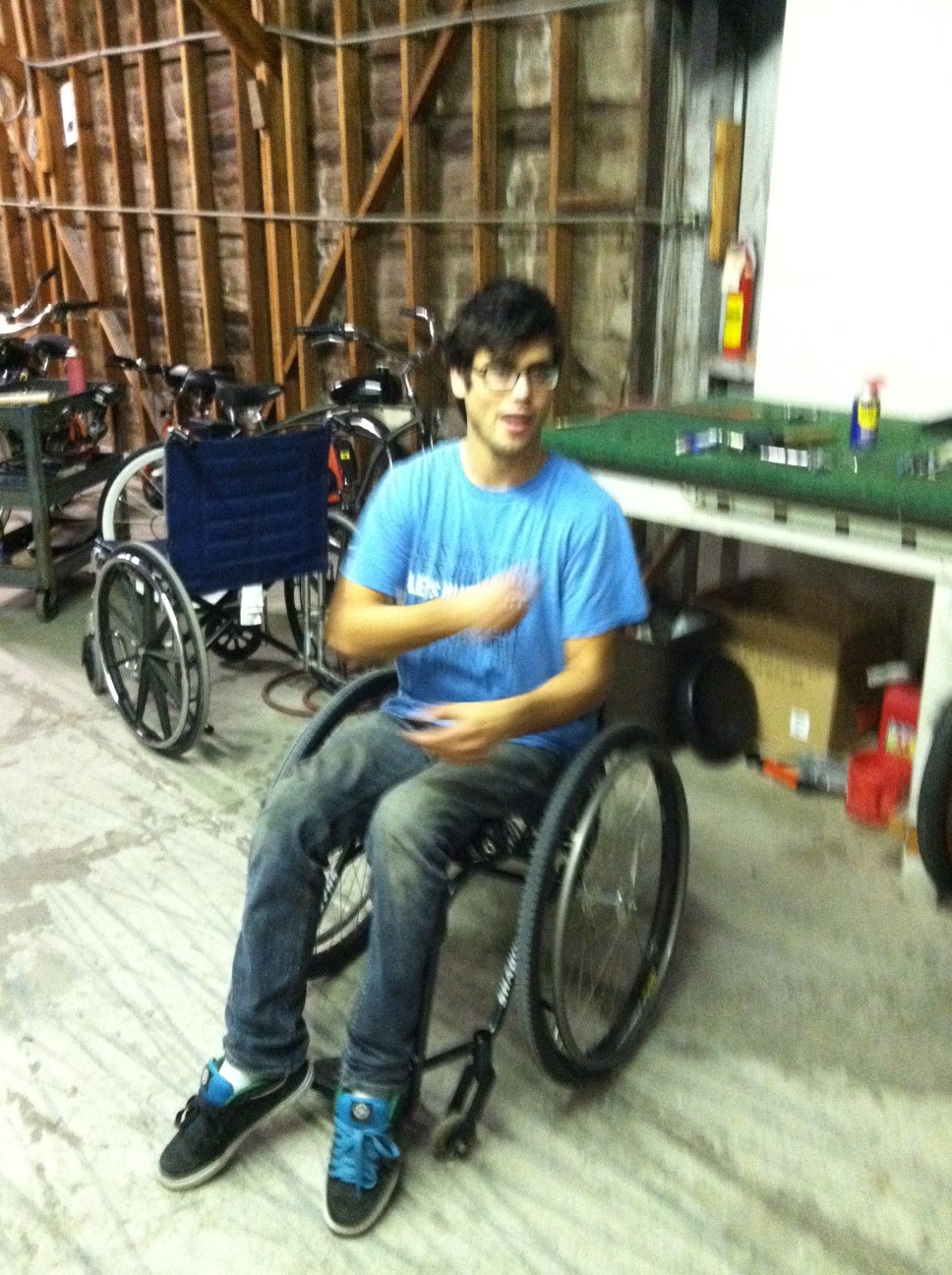
By the time he did, he was in a wheelchair most of the time or "crutching it" to get around.  See pictures below.  He had no nerve signal down the major nerve in his left leg, atrophied muscles, paralysis and significant pain.

He was told by others "there is nothing we can do" (to help you) and his family was encouraging him to go back to school and get on with his life.  

He continued to look for answers and found them with Peter Lathrop and the RITMSCENAR.  He recently recorded a short video of what happened next.  Take a look.  

Please note that the RITM SCENAR is a Class II medical device and is cleared by the FDA for the relief and management of chronic and acute pain and the management of post-surgical and post-traumatic pain.

Here are a couple of pictures of Keith before the healing journey: