Thursday, September 29, 2016

The Hardest Thing You’ll Ever Have to Do After an Injury – Let It Heal

Relax and let your injury heal. Your body will thank you for it!
Many of the clients who come to see Dr. Lathrop are passionate athletes. They range from rough-and-tumble high school athletes to weekend warriors and even competitive athletes. What they all have in common is that they always, always want to get back on the field as soon as possible after an injury. For too long, our culture has operated on a “shake it off” mentality that encourages athletes to push through pain and keep playing. Pain is the body’s way of telling you that it is injured. Playing through the pain may seem courageous in the moment, but it can actually hurt your long-term prospects as an athlete!

Pain Often Means Injury

An injury like a twisted ankle or torn ligament changes the body on a cellular level. The swelling, inflammation, and drumming pain you feel is your body’s way of telling you to stop using that area of the body ASAP! The body needs time to recover, and the worst thing you can do is to keep running on that swollen ankle or otherwise ignoring the signals that your body is giving you.

This may seem obvious, but Dr. Lathrop constantly has to convince and cajole his athlete clients to take a break from their activity. How long? Until the injury is completely healed.

Letting the Injury Heal

One of the biggest mistakes athletes make is resting only long enough so that the worst of the pain of an injury passes and then taking the field again. Far too often, the injury itself is not entirely healed. Even though the pain may be much less, your body is still damaged, and there is just no way your injury can totally heal if you are running, jumping, and diving too soon afterwards.

It can be frustrating to take a month or even six months off in order to let an injury totally heal. Many athletes worry that they will lose the skills and gains they worked so hard to build, while others may have to skip important competitions or drop out of their team sports temporarily. However, the alternative is much worse. If you go back to your sport too early, your injury will never heal. You’ll face the prospect of playing in constant low grade pain that may grow and grow as the unhealed injury spreads. You won’t make many improvements to your game that way!

Something else to consider is that you are much more likely to reinjure yourself seriously if you already have an existing injury. For example, if a twisted ankle is not fully healed, it is highly likely that you’ll twist it again, and the new injury will probably be even worse and take longer to heal than the original.

In other words, even if it means another few months on the sidelines, let your injury heal all the way! You can use this time to do some off season training that won’t stress your injury, such as cycling or swimming.

How to Know When Your Injury Is Healed

Sometimes it can be hard to know when an injury is entirely healed. If you feel any sort of pain at the injury site when you take up your sport again, that’s a sure sign that it is not healed. You can also use the SCENAR to follow the progress of your healing. The SCENAR can actually read your galvanic skin response (biochemical signals the skin releases) and give you a readout that indicates the level of your injury. If you place the electrodes on the skin at the injury site and the reading comes back around 65, then the injury is serious. A reading of around 45 means the injury is healing. Once you get a reading of around 30 at the injury site, that means the SCENAR is no longer detecting any injury. You should be good to take the field again.

Don’t own a SCENAR? If you are a serious athlete or passionate weekend warrior, consider purchasing a SCENAR or scheduling a treatment with a nearby expert. 

Thursday, September 22, 2016

Is Pain Lowering Your Income?

Pain lowers your productivity, creativity, and patience...making you a less-than-stellar employee!
If you are one of the four in ten Americans who, according to the American Academy of Pain Medicine, reports that pain interferes with your mood, activities, ability to do work, or enjoyment of life, then it is a good bet that this same pain is losing you money. It’s not just the money you spend on doctor’s appointments, massages, medicines, and other healthcare. Pain can interfere with productivity at work. It’s kind of hard to go the extra mile at your job and impress your superiors when the pain gets so bad that you can barely focus.

What the Numbers Tell Us

You can probably feel how much your productivity drops at work when it’s a bad pain day. If that migraine starts throbbing or your low back is shooting pain up your spine, it can seem to take hours just to get through your email. Some studies have actually attempted to determine exactly how much revenue employers are losing as a result of your pain.
In 2010, a study called “The Economic Costs of Pain in the United States,” by Dr. Darrel J. Gaskin and Dr. Patrick Richard estimated that the total value of lost productivity in the United States each year due to pain ranged from $261 billion upwards to $300 billion. The lost productivity came in the form of days of work missed, hours of work lost, and lower overall wages.

How Much Are You Losing?

This study proves that chronic pain is hurting employers almost as much as their own employees, but what does this mean for your paycheck? Pain could be hurting your wallet by forcing you to take sick days instead of cashing them out. If you take too much sick leave, you may need to start taking unpaid days. That’s only the tip of the iceberg, however. Chronic pain changes your attitude, perception, and even your goals.

Pain can make you cranky and short, which won’t go over well with your co-workers. If you start missing deadlines or doing sloppy work, because you can’t focus, your boss is going to notice. Finally, if pain makes it so that just getting through the day doing the bare minimum is a victory, you aren’t exactly in the mindset to climb the corporate ladder.

All of these factors make you someone your boss probably doesn’t want to promote anytime soon, and you may even lose your job if your work quality slips too much. If you are self-employed or work on commission, then lost productivity due to pain can have an immediate and devastating effect on your income.

Invest In a Pain-Free Future

Getting rid of your chronic pain is obviously its own reward, but if you need some financial incentive to invest in pain management options, think of how much money pain could be stealing from you. The SCENAR could be your solution to a pain-free and more productive future. This device supercharges the body’s own natural healing processes and can even help heal old, long-term injuries that have been plaguing you for years. Invest in yourself, your career, and your future. Consider scheduling an appointment with a SCENAR expert today or purchasing your own SCENAR unit.

Thursday, September 15, 2016

How to Find the Injury Site When Using a SCENAR

If you are a chiropractor, acupuncturist, physical therapist, or anyone who helps clients relieve pain, one of the first things you will discover is that a point of pain on the body doesn’t always correlate to the injury area. The body is a complex and fascinating ecosystem. When something gets off kilter, it can create effects throughout the body, like ripples in a pond causing pain in different areas. For example, a bad knot in the muscles of the back could cause pain to radiate into the shoulders or neck. A talented healer must be able to use experience, intuition, and the body’s clues to follow the path of pain to the true site of injury even if the patient themselves doesn’t know where it is!

The Skin Is Your Map

The SCENAR makes this hunt easy, because it is able to read the subtle signals that the skin gives off in order to find the true point of pain. The skin is in many ways a mirror to what is happening beneath it, and if you know how to read the skin, you can find any injury on a patient. When a patient receives an injury, the biochemical properties of the skin will change as it reacts to the injury. This is known as the galvanic skin response, or GSR. The SCENAR was designed to read and interpret your GSR so that an operator can easily use the SCENAR to find the true site of injury.

Using the SCENAR to Find an Injury

The SCENAR is so advanced that it can actually take a reading of your galvanic skin response and give a reading that indicates the level of injury. If you are looking for an injury spot, place the electrode of the SCENAR on the area of pain for three seconds and wait until the screen gives you a reading. Here are what the readings mean:

·         30 or lower = No injury
·         45 = Mild injury or close to an injury point
·         65 or greater = You’ve hit a point of serious injury or damage and should use the SCENAR

If you place the SCENAR at a point of pain and receive a reading or 30 to 40, it is likely that you haven’t actually found the real injury yet. Now, the detective work begins. Every few seconds, move the SCENAR a few inches away from the pain point and take a new reading. If the numbers go down, then you’re getting colder. If the numbers start to rise, then you are getting closer to the real injury point. (It’s kind of like playing the childhood game of Hot/Cold.) Keep experimenting until you see readings in the 60s. This is when you’ll know you’ve found the injury. Explore around the injured area to get a sense of how big the injury is. You’ll want to use the SCENAR at the point of the highest readouts and in the surrounding areas that give high readouts.

Once you become adept at using the SCENAR, it should only take five or ten minutes to find the true site of a client’s injury even if they can’t give you a good idea of where the injury is. If you want to learn more about becoming an expert operator of the SCENAR, consider signing up for our next Level One Training Class in San Diego, or request direct mentoring on the SCENAR

Thursday, September 8, 2016

Why Can’t the Body Always Heal Itself?

If the body is so good at healing itself, why do some injuries seem to linger?
The body is an amazing healing machine. Cuts disappear, leaving behind only light scars. Twisted ankles eventually mend, and even fractured bones knit back together. And yet…why is it that some injuries just never seem to heal? Why do certain wounds stay open for years and backs chronically ache after a mild injury? The truth is that in many respects, the body’s healing process is an anachronism, built to respond to circumstances that no longer exist.

The Caveman Healing Process

For the vast majority of our time here on earth, humans have lived as hunters and gatherers. In our caveman days, we lived very dangerous lives. We had to chase our food, fight for land, and protect our families. This often led to serious injuries. In response, the body’s healing factor would cause swelling around the injury site as well as a big dose of pain to work as a warning that the injured area should not be used.

Isolating injuries was important for survival, so for more serious injuries, the body would slap on scar tissue as a way of protecting the injury without fully healing it. These days, we don’t need massive amounts of pain or the quick and easy patch-up of scar tissue to help us stay on our feet. We don’t have to be ready to run away from sabretooth tigers at the watering hole or protect our village from invaders. What we need today is to convince our body to skip the scar tissue build-up and to work to actually fully and completely heal injuries.

The SCENAR Healing Process

This is where the SCENAR comes in. This little device delivers electro-stimulation that travels through the skin and stimulates cells in the injured area. Basically, it supercharges the mitochondria in the cells, which operate like the cell’s batteries. With its batteries fully charged, the cell can work on producing more helpful proteins that bind torn tissue back together, thus healing an injury instead of just slapping scar tissue over it and calling it a day.

Unfortunately, we can’t exactly tell our bodies to change the way they heal our injuries, but we can spur on the body’s natural healing processes, encouraging it to focus on healing instead of isolating the injury with scar tissue. The SCENAR is our method of promoting the body’s healing process and getting rid of pain permanently.

If you have a new or nagging injury that simply isn’t healing on its own, the SCENAR may be able to help. Considering visiting a SCENAR expert near you or purchasing your own SCENAR, so you can stay healthy in the long term. 

Thursday, September 1, 2016

How Cross-Training Can Help You Prevent Injuries and Chronic Pain

Yoga, Pilates, and stretching are all great cross-training options. Photo via Visual hunt 
There’s a reason why every sport has its own group of common injuries. Tennis elbow and shoulder injuries are rife in tennis and golf. Plantar fasciitis, Achilles tendinitis, and shin splints take center stage in the world of running. Whenever you put specific areas of your body under a constant level of strain, you invite injuries. Of course, that doesn’t mean you should give up your beloved sport and spend your days binging on Netflix. Instead, incorporate cross-training into your workout routine.

Cross-training simply means adding different exercises and activities into your workout routine that take the emphasis off of the joints and muscles you use most in your primary activity. Are you a runner who spends your days putting constant pressure on your feet, ankles, knees, and hips? A great cross-training option is to add two days of cycling, swimming, or weight training into your workout routine.

How Cross-Training Helps Prevent Injuries
Years of regularly practicing a single sport or activity can wear down the primary joints, muscles, tendons, ligaments, and bones that you use in your sport. Additionally, you may ignore stabilizer muscles that are critical to helping you prevent injuries.  

Cross-training allows to take the pressure off overused muscle groups my introducing new methods of training, and also gives you the chance to strengthen stabilizer muscles. Many athletes cross-train by lifting weights and working on improving core strength, a key stabilizer system.

Cross-Training Can Help You Break out of Plateaus
Cross-training can also make you a better athlete! Putting your body through a different training regimen will force it to adapt by getting stronger in different areas. For example, strengthening your core may give you better balance and more overall strength. Perhaps swimming increases your cardiovascular endurance and strengthens different muscles in your shoulder. A lot of athletes discover that adding cross-training to their fitness routine two days a week can pay big dividends out of the field.

While cross-training can help you prevent future overuse injuries, it can’t help heal old and nagging injuries. For that you need to use the SCENAR. Only the SCENAR uses electrical pulses to reprogram your cells to begin healing again. While it works best on new injuries, it CAN heal most old injuries too, even if you’ve had them for years. You don’t have to give up on your favorite sport or physical activity when you use the SCENAR.

Thursday, August 25, 2016

Why Hasn’t Your Doctor Heard of SCENAR?

It may take an entire generation before doctors with new training get into the field. Photo via VisualHunt.com 
If you’ve had the chance to experience SCENAR therapy for yourself, you may wonder why the whole world isn’t talking about this amazing technology. The SCENAR offers incredible healing potential for just about every injury, from minor cuts to twisted ankles and even spinal damage. It can heal brand new injuries before they even have time to set in or old injuries that have been causing chronic pain for years or even decades! So why isn’t your doctor prescribing SCENAR treatments to every single patient?

Clients ask Dr. Lathrop this question all the time. He’ll tell them all about the SCENAR and what he has been able to achieve with it, and they’ll raise an eyebrow and ask, “If this thing is so great, why isn’t my doctor using it?”

The answer has to do with the way the U.S. medical system works, how doctors prescribe treatments, and the power of money to affect awareness of treatment options.

Slow Adoption of New Technology
Before we can change the way doctors treat patients, we must change the way they learn medicine. This can be a very slow process. A technology must be proven, adopted, and thoroughly visible before it will trickle into medical teaching programs. Even then, it may take an entire generation before doctors with new training overtake older doctors who still practice according to the way they were taught.

Even though the SCENAR has been used throughout Russia for over 20 years, it only received 510(k) FDA clearance in 2010. In other words, it has only been available by prescription in the United States for six years. Slowly, the SCENAR is popping up in continuing education seminars, but even then, doctors still need to change the way they manage pain…

Prescriptions vs. Application
Another reason you most likely can’t get SCENAR treatments from your doctor is because primary care physicians do not actively apply long-term treatments in their office. Sure, they’ll give you a TB booster or write you a prescription for pain medicine, but if long-term treatment is called for, they’ll refer you to a pain management specialist or physical therapist. This system limits a doctor’s knowledge of the newest pain treatment therapies.

Money, Money, Money
As you may know, the major drug companies in America have money. Lots of it. A big portion of this money goes towards convincing doctors to prescribe a company’s high-cost, patented pill. According to a report by the Pew Charitable Trust organization, the pharmaceutical industry spent over $27 billion on drug promotion in the year 2012. $24 billion of that amount was spent on direct marketing to physicians. Doctors are busy men and women, and they can’t always go out of their way to look into every new possible treatment available, especially not when they have drug reps constantly in their office or when they attend medical conferences sponsored by drug companies. Unfortunately, the most visible product almost always wins out, even if it isn’t the best product.

How to Educate Your Doctor About the SCENAR
Don’t be surprised if your primary care physician or even your pain management specialist has never heard of the SCENAR. If you think this is a crying shame, then you can do something about it. Create the visibility that the SCENAR needs to gain wider acceptance. Tell your story to your family and friends, and especially to anyone in the medical or healthcare fields. Tell your primary care physician about the SCENAR. Tell your chiropractor, your massage therapist, or even your personal trainer. Invite them to read our website, or, if they really want to understand the foundational concepts behind the SCENAR, Dr. Lathrop’s book Bioelectric Systems.


Dr. Lathrop is also happy to speak with any medical practitioner and explain the SCENAR to them directly. It will take time, but with each new pain-free client, we can grow awareness of SCENAR technology. Eventually it will be adopted into widespread medical practice where it can help countless people heal faster and heal better! 

Thursday, August 18, 2016

Is Your Chronic Neck Pain Really Healed?

If neck pain continually flairs up, then your neck injury isn't healed! Photo via Visualhunt 
Are you someone who experiences chronic neck pain “flair-ups”? It’s kind of like the world’s least exciting merry-go-round. One day you wake up and you can barely turn your head. Maybe you even experience shooting pain down your arm or spine. For the next few days you are miserable until the pain eventually fades away. You are off the merry-go-round of neck pain…but for how long?

Neck Pain Flair-ups Mean that You are Still Injured!
Many people deal with on and off with neck pain for years! Sometimes it started with a bad fall, a sports injury, or whiplash in a car accident. Whatever the cause, many of these people believe that when the pain is gone the injury is healed…except the pain keeps coming back!

If the pain continually returns, that means the original injury has never fully healed. It is like a ticking time bomb waiting for you to sleep in the wrong position for a night or to turn your head too swiftly. Then, pow, the pain is back again, and you can barely turn your head.

Neck Pain Flair-ups Need to be Treated
Don’t ignore neck plain flair-ups. They tell you that your original neck injury is not completely healed. Even if the pain goes away each time, chances are high that it will come back again and again and again. Instead of waiting for the bomb to go off, work to heal the injury. This is the type of situation where the SCENAR is a great option. The SCENAR helps your cells re-start the healing process even when an injury is months or even years old. It can heal the original injury that is causing your flair-ups.

Don’t put up with chronic neck pain or live with the uncertainty that another flair-up might be right around the corner! 

Thursday, August 11, 2016

Why You Absolutely Shouldn’t Get Used to Pain

Chronic pain is not normal! Photo via Visual Hunt  
It’s amazing what a person can get used to. New moms and dads somehow find a way to function on a teaspoon of sleep after they bring their bundle of joy home. Intrepid hikers on the Appalachian Trail learn the simple joys of living with only what they can carry on their back. A lot of people also learn to live with constant, low levels of chronic pain. According to the Institute of Medicine of The National Academies, roughly 100 million Americans suffer from chronic pain. That’s almost 1 in 3 Americans!

How Chronic Pain Becomes Normal
I bet you know a friend who hates their job but doesn’t quit. Somehow, the job is just bearable enough that the friend won’t make the effort to find something better. Chronic pain is like this too. No one wants to have chronic pain, but if you’ve been dealing with it for years, you may have gotten used to it. I meet people all the time who don’t even remember what it is like not to be in chronic pain. They wake up every morning expecting pain and never assume that they can do something to change it.

This is a HUGE problem, because chronic pain saps away the joy in life. It may prevent you from doing the things you used to love, like playing golf on the weekends or running in a charitable 5k. If may take all of your energy just to get through the day, so after work you collapse on the couch instead of volunteering or going out with your friends. Without even realizing it, you may lose that spark that motivated you to keep improving, keep taking risks, keep seeing what else life had to offer.
One of the most powerful quotes I’ve ever read is this:

Pain has a way of clipping our wings and keeping us from being able to fly…and if left unresolved for very long, you can almost forget that you were ever created to fly in the first place. Wm. Paul Young.

You DO NOT Have to Live with Chronic Pain
Do not forget that you were created to fly. Even if you have had chronic pain for years, that doesn’t mean that you can’t achieve chronic pain relief. The only way to guarantee chronic pain for the rest of your life is to do nothing.

Every day the SCENAR helps people in pain re-discover their wings. The SCENAR can jump-start your body’s healing process. Even old injuries can heal. You CAN find chronic pain relief. Believe it, then find a SCENAR doctor near you or purchase your own SCENAR.

Thursday, October 29, 2015

Can SCENAR Be Used for Headaches & Migraines?

Can SCENAR be used for headaches and migraines?  The immediate answer is "yes!"  It is a very effective pain relief technology and it is FDA cleared for pain treatment.   Why would you see if it reduces or eliminates your headaches and migraines?  Keep reading!

I wouldn't trade places with anyone who has chronic headaches or migraines and I FEEL for you and just want to take away the pain.  After recently seeing another young girl truly suffering with migraines I feel compelled to write this.  This is often how a blog post comes to be.  Seeing someone in pain have their life changed with SCENAR vs drugs.

It is appalling that over 30% of people have missed one or more days of work or school in the past 3 months due to migraines and that 24% have had to go to the ER with a severe migraine.*

We know they are difficult to medically manage and that is what we see as a big part of the problem - the medical management, namely drugs.  

Migraine Triggers

From most of the migraine and headache sufferers we meet it is clear that identifying the underlying cause and/or trigger and then ameliorating it doesn't happen consistently.  There seems to be a easy reach for a prescription pad in our society. 

Some of the top triggers are:
  • Stress
  • Overuse of pain meds (analgesics)
  • Disturbances in sleep
  • Food additives
  • Chocolate
  • Alcohol
  • Perfume
  • Changes in weather
  • Bright lights
  • Dehydration
  • Too much caffeine
Isn't it interesting that "over use" of pain meds can actually lead to chronic migraines?   It isn't really clear why over use leads to more pain or makes symptoms worse but it is clear that analgesic rebound headaches need to be addressed.

Our first recommendation

Each person really needs to have their life fully reviewed and triggers like the ones above and others removed.  This takes far more time than the average doctor is allotted for seeing patients.  And it is so important!

Now, Let's Look at Drug Side Effects

In addition to the fact that overuse of pain meds can lead to more pain, one must also be aware of drug side effects.  The most common drugs prescribed for headaches and migraines are the NSAIDS and triptans.   Current over-the-counter NSAIDS include:

  • Aspirin compounds (such as Anacin®, Ascriptin®, Bayer®, Bufferin® and Excedrin®)
  • Ketoprofen (such as Orudis KT®)
  • Ibuprofen (such as Motrin®, Advil®, Nuprin® and Medipren®)
  • Naproxen sodium (such as Aleve®) 

PLEASE NOTE:  Over-the-counter NSAIDs are effective pain-relievers, but they are MEANT for short-term use. When taking them for long periods of time, you should be carefully monitored by your doctor so he or she can detect the coming on of harmful side effects and modify your treatment plan as necessary.

The Cleveland Clinic also has an additional TWENTY prescription level NSAIDS on their list here.  

So what are they side effects? The most frequently reported side effects GI symptoms, like:
  • Gas and bloating
  • Heartburn and/or stomach pain
  • Nausea and/or vomiting
  • Diarrhea and/or constipation
These side effects can usually be be relieved by taking ANOTHER DRUG!   Don't you hate when they tell you that?  Take this....and if this happens take this.....and if this happens....take THIS!

OK, some other side effects of NSAIDs include:
  • Dizziness
  • Feeling lightheaded
  • Problems with balance
  • Difficulty concentrating
  • Mild headaches

OK, then there are the triptans.  

Triptans are serotonin receptor agonists.  Brand names like Axert, Frova, Maxalt, Imitrex,  Alsuma, and Zomig.  It isn't clear how they stop a migraine.  They do constrict blood vessels in the brain and relieve swelling.  They can be useful and effective.  And, do you really want to manage your life around drugs?

Given we regularly use the SCENAR, which doesn't have a side effect profile like drugs, this list of side effects and contraindications for the triptans concerns me.

So, what are we saying?

  • Figure out and know your triggers, then eliminate them.  
  • We have a number of times needed to recommend some neuro-psychology techniques and processes in order to help manage, reduce and eliminate certain triggers.  Be open.
  • A recent study by the New York Headache Center suggests that a magnesium deficiency may contribute to or cause migraines.  In trials, sufferers responded to a daily dose of 400 t o 600 milligrams of magnesium.  Consider this - try it.
  • Don't take drugs long term given their side effect profile and that they aren't taking care of the underlying cause long-term.
  • Learn about SCENAR medical technology.  Have a diagnostic assessment.  Under the guidance of an experienced SCENAR therapist have a series of SCENAR sessions and evaluate the results.  SCENAR is FDA cleared for pain treatment.  Don't you owe it to yourself?  
    • Given SCENAR is an active biofeedback device and how it physiologically affects the body it is aligned with biofeedback which the American Medical Association has "approved" for headaches as biofeedback helps control the functions of the central and autonomic nervous system. 
Here's to seeking and achieving pain relief!
Kay
Pain Treatment Consultant

*Chris Iliades, MD Brigham Young University, The Migraine Study II

Friday, October 16, 2015

When Your Pet is Hurt SCENAR Can Help

It is not always so easy to tell when your furry kids are in pain, is it?  Of course, like we humans, they may really let out a yelp or be more vocal with whining, growling or other sounds. And, if they are really more vocal than normal you know something is quite wrong.  There are also other obvious as well as more subtle signs that tell you something may be wrong even if they aren't "telling you so."

Today's post (October 16, 2015) is about our two dogs, Darcy and Hunter, and two different signs of pain - a fresh injury and a chronic issue.  It is also about what we are doing to make them both better with our RITM SCENAR.  At the bottom you will find an update from October 21, 2015!

Let's start with Darcy.  We aren't absolutely sure what happened because we didn't witness it and yet we think we have a good idea. It all started when we heard her let out a blood curdling scream/whine in the bedroom upstairs and do it again as she came down the stairs. We suspected she misjudged her jump off the bed and landed wrong.  It was clear that walking was VERY painful as the sounds she was making were painful to hear.  She would especially yelp/cry loudly every time she had to stand up...the act of pushing up was painful.  Once she was up she could walk though she wanted to avoid stairs.

Thankfully we have a Pro Plus SCENAR device. 

We immediately used it to identify the areas of tissue damage (the device has an assessment mode to get initial response numbers). Using a "comb" probe with teeth, which gets through the hair to the hide, we could measure and find the area of greatest injury and irritation.  The SCENAR told us specifically where the problems were!

We then treated.  We have done this three times per day for the past two and a half days and will continue till she is healed.  The measurement numbers were highest right in the hind leg joints and the numbers are going down!  As well, she now stands up without crying or sign of pain.  She is still hesitant with a deeper stair but small/short ones are ok.  She is progressing!

Now if this was not improving we have an ace up our sleeve!  We have trained a wonderful veterinary physician in the use of SCENAR and she has fully adopted it into her vet hospital.  If needed we would take Darcy right down to see Dr. Jacque McAndrew at South San Diego Vet Hospital.

Thank you for SCENAR in our house!

OK, so Darcy's injury is fresh.  Hunter, on the other hand, has been giving us signs of a more chronic pain issue in his hips.

What are the signs to notice that tell you your furry kid may be in pain or uncomfortable?
  1. Constant or excessive grooming in a particular area.  For Hunter it has become the right back hip area.
  2. Changes in their sleep, difficulty resting, lack of appetite or not eating, and less drinking.  No change here for Hunter - he is the first to always clean his plate and ask for more!
  3. Withdrawing or seeking affection.  Here is where there has been a big change for Hunter.  We now find him out by the side of the house in the alley for hours on end. And, he is backing up for "butt rubs" more often - more aggressively.
  4. Aggressive behavior
  5. Other general behavior changes - ask yourself "what's changed?"
Once we became really aware of these changes happening we took to finding the issues and treating Hunter with the Pro Plus RITM SCENAR.  It is such a great "go to tool" to have in your home.

Peter always says "biology is biology" and whether the pain is in a human or animal - it can be identified and resolved.  Ask us about owning a SCENAR for your pets today!  Call 619-501-3752.

UPDATE on October 21, 2015.

Today we are delighted to report that with twice daily home SCENAR treatments Darcy has progressed significantly.  The numbers are lowering and more importantly - when we went looking for her this morning DOWNSTAIRS (because she hasn't climbed the stairs in a week) she popped her head around the corner at the TOP of the stairs and came running down!  All without a peep!  Yes, she climbed this full set of stairs during the night and came back down this morning.  We are happy parents!

Ask us about SCENAR for your household.  Get a free demonstration on you or your pet by calling 619-501-3752 and referencing "Darcy"....we will come to you if you are in San Diego County.


Friday, September 25, 2015

RITM SCENAR Helps With Fall Sports Injuries

What's your favorite fall sport?  What about your children?  Soccer, tennis, volleyball, wrestling, football, swimming, hiking or cross country running?  Regardless of what it is we know you all want to stay in the game through the full season!

To do that we encourage you to take the time to refresh yourselves on injury prevention tips and tools and start learning for the first time if you have young kids new to leagues.  You also want to consider having a SCENAR in your home to treat issues as they arise instead of reaching for ibuprofen, Tylenol or other over the counter pain-killers and anti-inflammatories with their host of side effects.

Whether you are the athlete, parent or coach you want to make safety and optimal health your first priority!


 If you are wearing your parent or coach hat - keep these things in mind:

  • Have your kids get in for their pre-participation physical exam if they haven't yet done so
  • Instill in them the mindset that "warming up properly" before practice as well as the game will serve them well
  • Make sure to cool down and take breaks if you are in climates like we are here in San Diego, CA and Southern CA - as it is still HOT and HUMID deep into September!
  • Have your kids hydrate, hydrate, hydrate!  No sodas or sugary juices - plenty of water!
  • Teach your kids how to become mindful of their body  - it's simple really.  Have them close their eyes. Ask them to reflect on where their feet are, their legs are, their arms are, their head etc.  Ask them to notice what they feel.  Have them describe what they feel.  This kind of body awareness relies on receptors in their joints, muscles, ligaments and other soft tissue.  We aren't aware of our body unless we actively think about it.  You want them to tell you if they have headaches, pain, weakness, stiffness etc., all warning signs of injury.
  • Have them wear recommended protective gear
  • Be mindful of  fresh and "overuse" injuries and use your home unit SCENAR to reduce pain and inflammation in the soft tissue.  Be consistent. 
If you are the adult athlete you know that SPEED and DIRECT CONTACT are the two most common causes of injury. Some of the common fall injuries are:

  • Traumatic injuries to knee ligaments or the shoulder joint
  • Overuse injury to the back
  • Concussions.
  • Heat injuries are issue an issue here in SoCal
If a fresh or chronic injury is impeding play in your household or on your team call us.  Learn more the RITM SCENAR can get you back in the game.  Ph. 619-501-3752.

Sunday, September 13, 2015

SCENAR Made the Difference - More Than Just Pain Relief Says Client


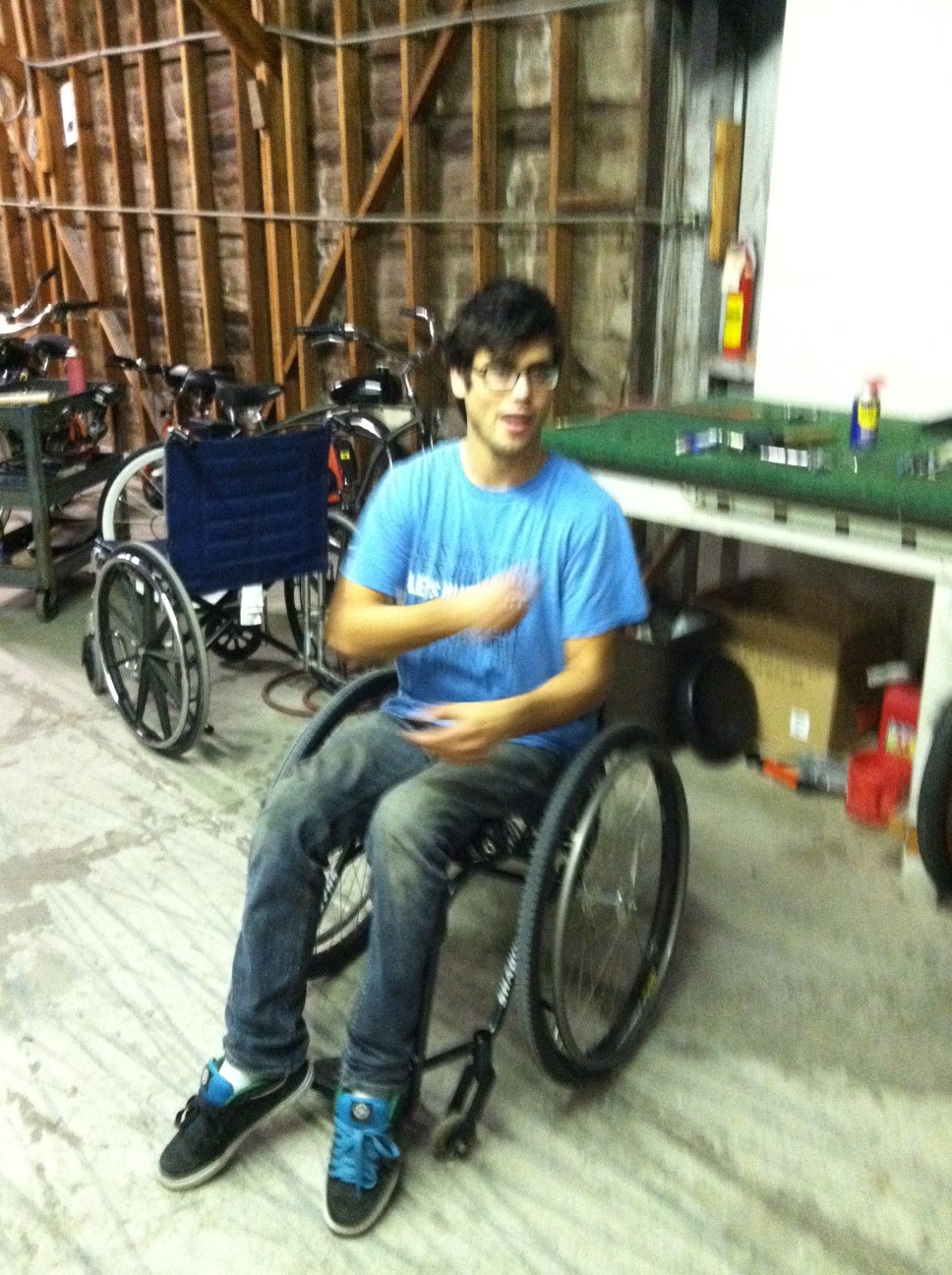
Keith Cammell found Peter Lathrop and the RITM SCENAR in 2012, years after his horrific motorcycle accident on the LA freeway in 2007. 

By the time he did, he was in a wheelchair most of the time or "crutching it" to get around.  See pictures below.  He had no nerve signal down the major nerve in his left leg, atrophied muscles, paralysis and significant pain.

He was told by others "there is nothing we can do" (to help you) and his family was encouraging him to go back to school and get on with his life.  

He continued to look for answers and found them with Peter Lathrop and the RITMSCENAR.  He recently recorded a short video of what happened next.  Take a look.  

Please note that the RITM SCENAR is a Class II medical device and is cleared by the FDA for the relief and management of chronic and acute pain and the management of post-surgical and post-traumatic pain.

Here are a couple of pictures of Keith before the healing journey:


Monday, August 3, 2015

35 Reasons to Try SCENAR for Pain Relief This Summer

  1. You were told your painful injury/condition is permanent or won't get better!
  2. THEY say it's "chronic pain" and "live with it"
  3. You've tried standard "pain management" and it isn't working for you
  4. Same old, same old doesn't work for you.  YOU search for new solutions
  5. SCENAR activates your body's known pain relieving, self repair mechanisms
  6.  You consistently take drugs to make or dull your pain
  7. Your pain/pain meds are affecting your concentration, memory, and critical thinking abilities
  8. Pain meds may be causing or contributing to constipation, sleep-disorder breathing, hypothalamic-pituitary-adrenal dysregulation, and overdose (1)
  9. Chronic pain has damaging efffects on the brain (2)
  10. Use of SCENAR may likely reduce or eliminate your need for pain meds
  11. SCENAR has no side effects and is non-addictive
  12. SCENAR has been show to be more effective than pain meds in back pain multicenter study (3)
  13. SCENAR gets at the underlying cause of the pain unlike pain meds or TENS
  14. Pain lowers your motivation to move and exercise
  15. Your injury is not healing "fast enough" for you, YOU want back in the game!
  16. Pain has caused you to lose physical functions, athletic abilities, your favorite hobbies
  17. You like to take action to achieve the results you desire!
  18. You can see a practitioner for SCNENAR sessions to accelerate relief or learn to use SCENAR at home like Julie and many others do
  19. SCENAR is small and portable - it fits in a purse, briefcase, tennis bag, gym bag, golf bag, any sports bag
  20. Pain is affecting your significant other relationship
  21. Pain is EXHAUSTING and robbing you of a good sleep, sex and intimacy
  22. Pain is affecting your connection to your kids (you know it is - no denying!)
  23. You WON'T let this problem get in the way of your relationships
  24. You are one who is on the lookout for new concepts and solutions
  25. One SCENAR can treat the whole family - it isn't person specific
  26. Pain is causing more frustration, anger, anxiety and depression in your life
  27. Pain is driving you into social isolation and feeling lonely
  28. You DESERVE a happy, pain free life!
  29. Pain RELIEF gets you back on the path to active life
  30. Pain is affecting your work performance, your productivity, your career
  31. SCENAR's biofeedback relates to the communications systems in your body:  your brain, nervous system, hormonal system, skin and meridians and makes the work together better
  32. Pain relief comes with SCENAR therapy as it stimulates the body's own "internal pharmacy"
  33. SCENAR is cost effective - no ongoing prescription costs or monthly fees
  34. SCENAR helps pain associated with most conditions like:  Back Pain, Arthritis, Carpel Tunnel Syndrome, Herniated/Bulging Discs, Fibromyalgia, Headaches, Musculoskeletal/Soft Tissue Pain, Joint (shoulder, hip, knee, ankle) Pain, Neck Pain, Neuropathy, Sciatica, Spinal Cord Injury, TMJ, Trigeminal Neuralgia, Whiplash
  35. SCENAR relieves post-surgical pain without drugs
  36. BONUS REASON:  Pain keeps you from playing on the beach and in the waves with us! 

(1)  Baldini A, Von Korff M, Lin EHB. A Review of Potential Adverse Effects of Long-Term Opioid Therapy: A Practitioner’s Guide. The Primary Care Companion to CNS Disorders. 2012;14(3):PCC.11m01326. doi:10.4088/PCC.11m01326.
(2)  Northwestern University. (2008, February 6). Chronic Pain Harms The Brain. ScienceDaily. Retrieved August 3, 2015 from www.sciencedaily.com/releases/2008/02/080205171755.htm
(3) Back Pain and SCENAR – Prehospital Pain Relief.  Multicenter Comparative Study.  A.V. Tarakanov, A.A. Tarakanov. A. A. Yakushev, I.D. Hatisova.  Rostov State Medical University, Rostov-on-Don, State Healthcare Institution ‘City hospital № 21’, Saint-Petersburg.  2011.


Wednesday, July 29, 2015

Keep safety in mind playing summer sports

Summer generally means more time being outdoors, and playing sports outdoors.  Many people we know are also gearing up for fall races.  With all the increased activity comes an increased risk for injury.  Many sports injuries are from overuse or acute trauma.

You are probably already seeing it - people around you with some of the common summer sports injuries:

  • runner's knee
  • tennis elbow
  • tendonitis
  • neck and shoulder pain
  • back injuries
  • rolled ankles


BE PROACTIVE!  Take time to take care and be safe.  You only have one body, treat it with care.  Here are the tips you know and yet might just need to see again:
  •  Warm my your body and as a part of that learn the best ways to warm up for your particular sport, it isn't a one size fits all!
  • Get the proper equipment, and especially shoes for your sport and level of activity
  • Know your limits and mind them
  • Hydrate!  Drink plenty of water.  Your tissues should be like a full sponge and not a dried out one on the kitchen sink
  • Allow your body time to recover after activity
  • Seek expert attention when needed
HOME SCENAR DEVICES:  In addition, a number of our clients have the RITM SCENAR Sport D at home and use it regularly as a part of being active.  Ask us if you are interested in learning more.  619-501-3752.  Ask for Kay or Jack.

Watch and share this brief video where Julie shares what she is now able to do because of SCENAR (things she couldn't 3 years ago!).  This could be just the solution you or someone you love needs.

EnJOY these beautiful summer days!

Friday, July 24, 2015

Layers of injury start to go away with use of RITM SCENAR Sport D


Time and again we have clients like Julie Kidder tell us about how consistent use of their RITM SCENAR Sport D at home reduces their pain, and improves their mobility and life.  Listen as she shares about how the "layers of her injury" have gone away and what she was able to do for the first time in three years while she was in Boston recently!  Thank you Julie for sharing your story!

Wednesday, June 17, 2015

Further Functional Gains Possible with Jera Ratliff, PT On Our Team

Little did we know when we moved our offices to 4275 Executive Square, Suite 200 in La Jolla, CA that we would be settling in next door to an amazing Physical Therapist who specializes in functional manual therapy.  Meet Jera Ratliff

Jera is a 30-year practitioner of physical therapy and she has a steadfast truth she lives by - "to treat every person separately and distinctly as an individual and to provide the BEST and most comprehensive therapy available." 

Peter and Jera have spent a lot of time getting to know each other's work and are confident that collaborating will help them help their clients get the results they strive to achieve.


Jera is a graduate of the prestigious physical therapy program at The Ohio State University and yes, she is a Buckeye's fan.  She has completed thousands of hours of intense training beyond that as she earned her certification in Functional Manual Therapy® through The Institute of Physical Art (www.instituteofphysicalart.com).  

Jera has shared with us that it is this fully integrated approach that is the base of her treatment skills.  Teaching with the IPA to other PT's since 2001 she stays engaged with other top therapists and mentors across the country who collaborate and constantly push to achieve the next level of excellence. 

What we like about Jera is that she is a life-long learner!  In 2008 she undertook formal study with the Barral Institute (www.barralinstitute.com) and added the tools of advanced visceral manipulation and neuro-menigeal treatment to her skill set.  And she is currently studying treatment of the brain with Bruno Chickly, MD, DO (www.chicklyinstitute.org). 

Knowing that the body can heal itself and wanting always to provide the BEST in care available keeps her open and learning, building her skills and knowledge base and driving her dynamic therapeutic approach. Jera's clients get real solutions to healing and getting back to their lives.

We are delighted to introduce the power of SCENAR to her and to collaborate together here in La Jolla!


Jera Ratliff, PT, CFMT

Alternative Physical Therapy
4275 Executive Square, Ste. 200
La Jolla, CA 92037
(858) 964-2313
FAX (858) 408-2613

Dr. Lathrop Just Released A Revolutionary Two-Volume Set on Modern Electromedicine

Over the course of a long and prolific career, Dr. Peter Lathrop has always pushed forward to understand the intersection of science, medicine, and technology.  He has always been willing to embrace new technologies like the SCENAR, even when the traditional medical establishment was slow to catch on.

 After 35 years furthering the technology development and clinical use of FDA cleared electro-therapeutic devices as a neurophysiologist in San Diego, Dr. Lathrop has compiled his knowledge and treatment protocols into a fascinating and informative two-volume set of books, Modern Electromedicine Vol 1 and Modern Electromedicine Volume 2.

Together, these two books provide a deep and revolutionary exploration of the field of electromedicine and the use of electrotherapy technology to stop pain and speed up the healing of neuromuscular injuries.  The first volume of the book focuses on the underlying principles of neurophysiology, and cell function and dysfunction.  It serves as a great foundation for anyone who is relatively new to the field of electromedicine or who would like a refresher on the fundamentals. 

Holistic practitioners who are interested in utilizing the lessons of electromedicine to affect rapid and efficient healing will find a comprehensive exploration of Dr. Lathrop's work and results in Volume 2.  In this volume, Dr. Lathrop details the implementation and techniques used in diagnosis and treatment of injuries using electrotherapy, including FDA cleared electronic medical devices like the SCENAR.

If you are a use of the SCENAR, you must pick up Modern Electromedicine, Volume Two.  Dr. Lathrop was among the first health professionals to recognize the utility of the SCENAR in the United Stats and has been successfully using it for over nine years.  Throughout that time, he has developed a reputation as a preeminent SCENAR expert, and he shared that expertise throughout these two volumes.

Together these two books can serve as a crucial resource to any practitioner who helps patients manage and eliminate pain, including chiropractors, physical therapists, acupuncturists, massage therapists, and others.  Each volume is also filled with beautiful and striking images that can make these volumes function as great coffee table books for your practice.

Both books are now available for sale through Amazon.com and CreateSpace.  They can also be ordered through local bookstores, university bookstores and libraries.  By your copy of Modern Electromedicine Volume 1 and Modern Electromedicine Volume 2 today.


Wednesday, June 10, 2015

Welcome Joy Thompson to the The SCENAR Experts family!

We are delighted to assist Joy Thompson, HHP of San Marcos, CA as she integrates RITM SCENAR into her practice!  Here you see Jack Warren, our Community Manager, as well as Dr. Peter Lathrop with Joy at her office.  Joy just recently completed her SCENAR training from Dr. Lathrop.  She is a wonderful addition to our growing network of SCENAR therapists!


Joy has been a massage professional since 1999 and an HHP since 2002.  Her business, Joyful Hands Therapeutic Bodywork is appropriately named!  You can find her here online. 


Welcome to the SCENAR family Joy!


Tuesday, June 2, 2015

We Joined the Evolution at the California Chiropractic Assocation Annual Meeting

 Impactful Two Day Event in San Diego!

We at The Neuroadaptive Institute/SCENAR Experts were pleased and proud to co-sponsor Radio Jack's radio broadcast at the California Chiropractic Association's Annual Conference here in sunny San Diego this past weekend!

Thank you to the California Chiropractic Association (CCA) for co-sponsoring the broadcast.

What a wonderful opportunity to meet passionate, committed healers all pursuing more knowledge and skill to guide their patients toward well-being and optimized health.


Over the course of two days we met many chiropractors and had the pleasure of 20+ practice leaders.
All of the interviews will be available for listening on a select page at wsRadio.com.  As well, each chiropractor will be able to use their interviews in their marketing efforts to educate the public about chiropractic and their practice.

We announced the recent publication of our founder's new textbooks, Modern Electromedicine Vol 1 & 2 and did a drawing so several chiropractors could receive volumes of the book as a gift and momento from the conference.

We are pleased to announce the winners of the Modern Electromedicine books:
  • Dr. William and Claudette Satnick of San Diego, CA
  • Dr. Jeffrey Johnson of Walnut Creek, CA
Congratulations!

For more information on the impact the California Chiropractic Association is having in healthcare and wellness visit www.calchiro.org.


Sunday, May 24, 2015

Welcome Dr. Jacquie McAndrew to The SCENAR Experts family!

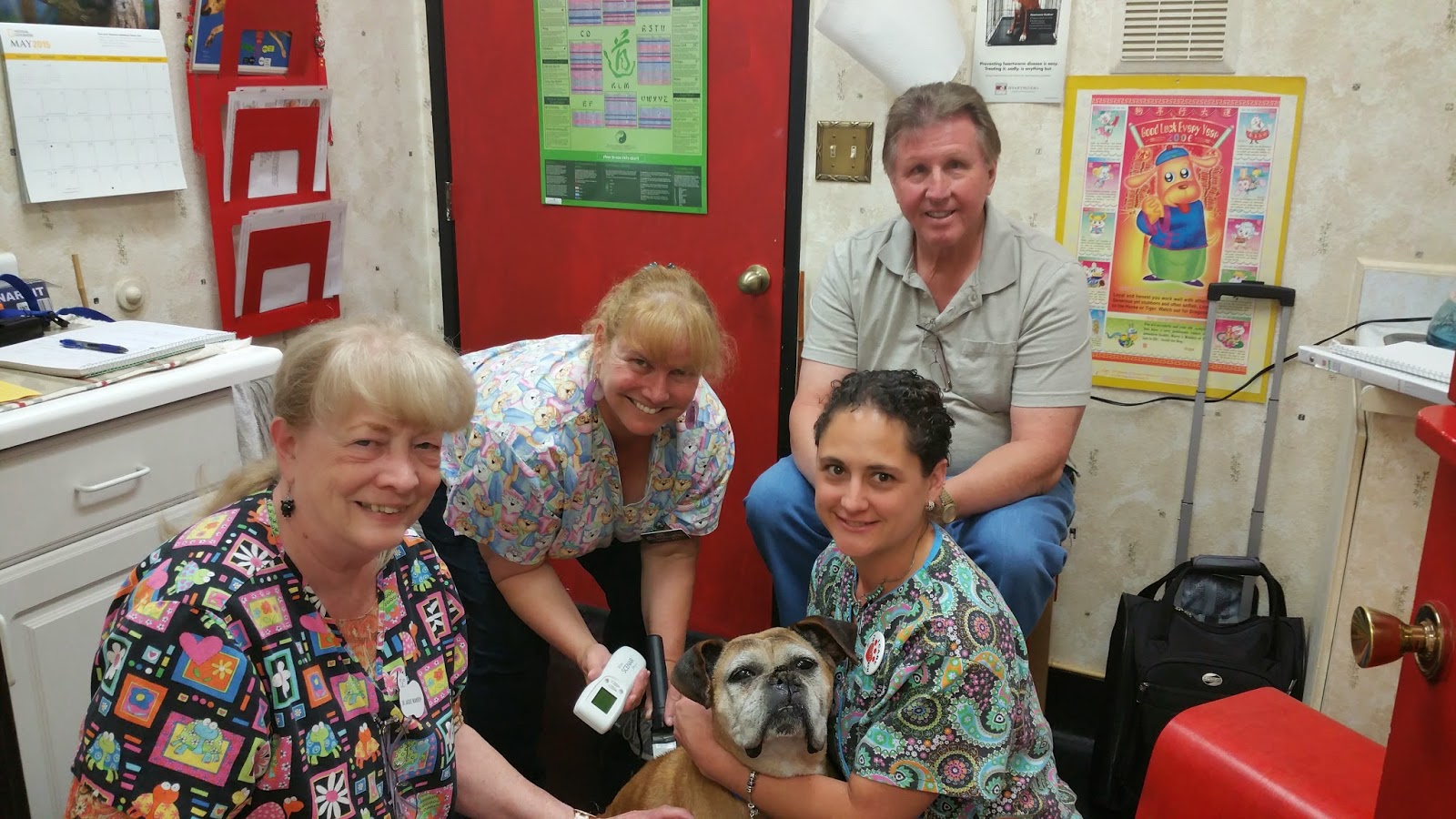
Dr. Peter Lathrop and the whole team at The Neuroadaptive Institute and The SCENAR Experts are delighted to welcome Dr. Jacquie McAndrew and her awesome staff (pictured here Amber and Carol) to the RITM SCENAR family!  Here you see them gathered with "Stella" at one of their training sessions.  You can learn about Dr. McAndrew and SCENAR at the South San Diego Veterinary Hospital.

We loved what Dr. McAndrew shared a week after this training: "We are using the SCENAR - one dog that has problems in both rear legs went home after one treatment and ran normally for the first time in years.  The owner purchased a package of treatments."   Happy dogs - happy owners!